

EOD RF Principles — 10-Student Mobile Training Team
$24,850.00
5-day on-site RF Principles course for up to 10 bomb technicians. Includes 10 HackRF One SDR kits (students keep), antennas, printed manuals, OpenTSCM software, certificates, and instructor travel. 40 hours of hands-on instruction covering RF theory, spectrum analysis, drone RF signatures, and RF emitter identification for EOD operations.
Description
EOD RF Principles — 10-Student Mobile Training Team
This 5-day on-site course provides bomb technicians with foundational knowledge of radio frequency (RF) signal interpretation using software-defined radio (SDR). Students learn to identify, classify, and analyze RF emissions from commercial devices including drones, wireless cameras, RF-triggered systems, and communication devices.
Training focuses on educational understanding of how RF devices operate and communicate, with direct applications to render-safe procedures, incident analysis, and technical awareness for EOD operations. Each student receives a complete HackRF One SDR kit with antennas, printed manuals, and OpenTSCM software — all theirs to keep for continued operational use.
This is NOT a tactical course. Content is educational, focusing on technical understanding of RF signal behavior for professional development and safe EOD operations.
5-Day Curriculum (40 Hours)
Day 1: RF Fundamentals for EOD
- Radio frequency theory basics (frequency, wavelength, power)
- Electromagnetic spectrum overview
- Common RF bands in commercial devices (2.4 GHz, 5.8 GHz, 433 MHz)
- How RF triggers work (IED applications)
- Introduction to software-defined radio (SDR)
- Lab: HackRF setup, spectrum analyzer basics, FM/WiFi/Bluetooth identification
Day 2: Signal Classification & Analysis
- Modulation types (FM, AM, OFDM, FHSS)
- Signal characteristics (bandwidth, power, duty cycle)
- Frequency hopping vs fixed frequency
- IQ sampling and waterfall displays
- Lab: Classify WiFi vs Bluetooth vs drone signals, measure bandwidth and power
Day 3: Commercial Drone RF Signatures
- How commercial drones communicate (control links, video links)
- DJI OcuSync system architecture
- FPV drone signal characteristics
- GPS and navigation signals
- Lab: Interpret DJI signals, distinguish control vs video transmission, analyze FPV drones
Day 4: RF Emitter Identification
- Common RF surveillance devices (WiFi cameras, RF bugs, trackers)
- Wireless camera transmission methods
- GPS tracker signal characteristics
- Cellular surveillance devices
- Lab: Identify WiFi camera signals, 433 MHz RF bugs, GPS trackers, multi-emitter analysis
Day 5: Advanced Analysis & Assessment
- Signal strength analysis (RSSI)
- Direction finding concepts
- IQ recording for post-analysis
- Building RF signature databases
- Technical report writing for EOD
- Lab: Full spectrum survey, unknown emitter ID challenge
- Final Assessment: Written exam (RF fundamentals) + Practical exam (identify 5 unknown signals)
What’s Included
Each Student Receives (Theirs to Keep):
- HackRF One SDR (1 MHz – 6 GHz, TX/RX capable)
- Wideband discone antenna (25-1300 MHz)
- Telescopic whip antenna (VHF/UHF)
- Dual-band WiFi antenna (2.4/5.8 GHz)
- SMA adapter set (5 pieces)
- Magnetic mount base
- USB 3.0 cable and SMA barrel connector
- Hard carrying case with cable organizer
- OpenTSCM software platform (pre-loaded 32GB USB drive)
- HackRF drivers + bonus SDR tools (rtl_433, URH, Inspectrum)
- Field operator manual (200 pages, color, spiral-bound)
- Student workbook with lab exercises (100 pages)
- Quick reference cards (4 laminated cards)
- Certificate of completion (40 CEUs)
Course Package Also Includes:
- 40 hours of on-site, hands-on instruction over 5 days
- EOD Maker RF circuit demonstration modules for live signal detection exercises
- All printed training materials and digital resources
- Instructor travel (CONUS)
Who Should Attend
- HDS-trained public safety bomb technicians
- Federal law enforcement EOD personnel (FBI, ATF, USSS)
- Military EOD seeking professional development (unclassified curriculum)
- Hazmat/WMD team members
- Technical operations personnel who operate ECM equipment
Prerequisites: Hazardous Devices School (HDS) or equivalent EOD training. No prior RF or SDR experience required.
Instructor
Jeff Jennings
Former U.S. Navy Electronics Technician
Electronics Instructor, Naval School EOD (Eglin AFB, 2006-2009)
16+ years in IED electronics and training development
Founder, Improvised Electronics LLC
“I’ve seen too many techs who don’t understand the RF environment they’re operating in. This course gives you the foundation to actually understand the invisible threat — not just react to it.”
FAQ
Do students need prior RF or electronics experience?
No. This course starts from fundamentals. If your techs can operate a computer, they can succeed in this course.
Is this course classified?
No. All content is unclassified and sourced from open materials. Suitable for all personnel regardless of clearance status.
Can my agency pay by purchase order?
Yes. We provide invoices formatted for agency reimbursement and accept purchase orders (NET30). GSA Contract #47QRAA24D0055.
What computers do students need?
Windows, Mac, or Linux laptop with USB port. Minimum 8GB RAM recommended. All software is free and open source.
Do students keep the HackRF kits?
Yes. Every student keeps their complete kit — HackRF One, all antennas, case, software, and printed materials — for continued learning and operational use.
Is there a certificate?
Yes. Certificate of completion with 40 Continuing Education Units (CEUs) provided for training records.
What about instructor travel?
Instructor travel within CONUS is included in the course price. No additional travel costs.
GSA Contract: #47QRAA24D0055
Contact: jeff.jennings@improvisedelectronics.com | 757-831-7150
Related products
-

EOD 3D Printing and Fusion 360 Online
Price range: $899.00 through $9,999.00 Select options This product has multiple variants. The options may be chosen on the product page -

AI Principles for EOD — 5-Day MTT
$24,690.00 Add to cart -
Sale!
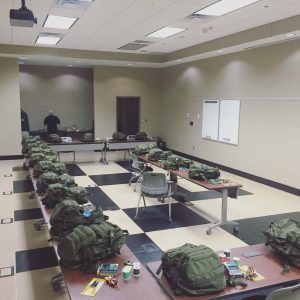
Comprehensive IED Electronics
Original price was: $25,000.00.$22,399.00Current price is: $22,399.00. Add to cart -
Sale!
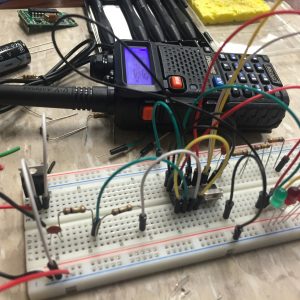
Advanced IED Electronics
Original price was: $33,000.00.$24,999.00Current price is: $24,999.00. Add to cart